3 million Moto Z handsets in year one. You don't outshout Apple. You out-think the category.
The setup
Motorola invented the cell phone. By 2016 that heritage bought exactly nothing at the shelf. Apple and Samsung outspent us by orders of magnitude, and seventy-one agencies were each telling a slightly different Moto story — which is another way of saying nobody was telling one at all. I ran global digital and social, 32 people worldwide, with one mandate: make Moto matter. Three campaigns show how.
Chapter One: Launch the innovation, not the phone
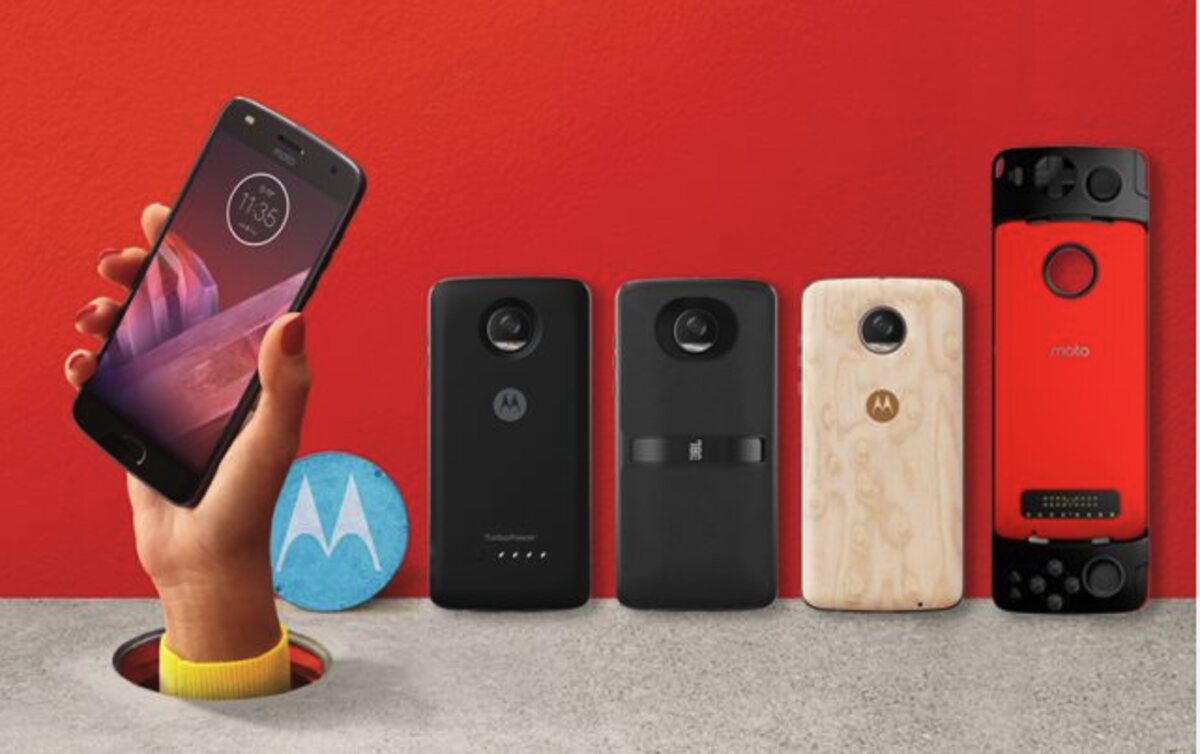
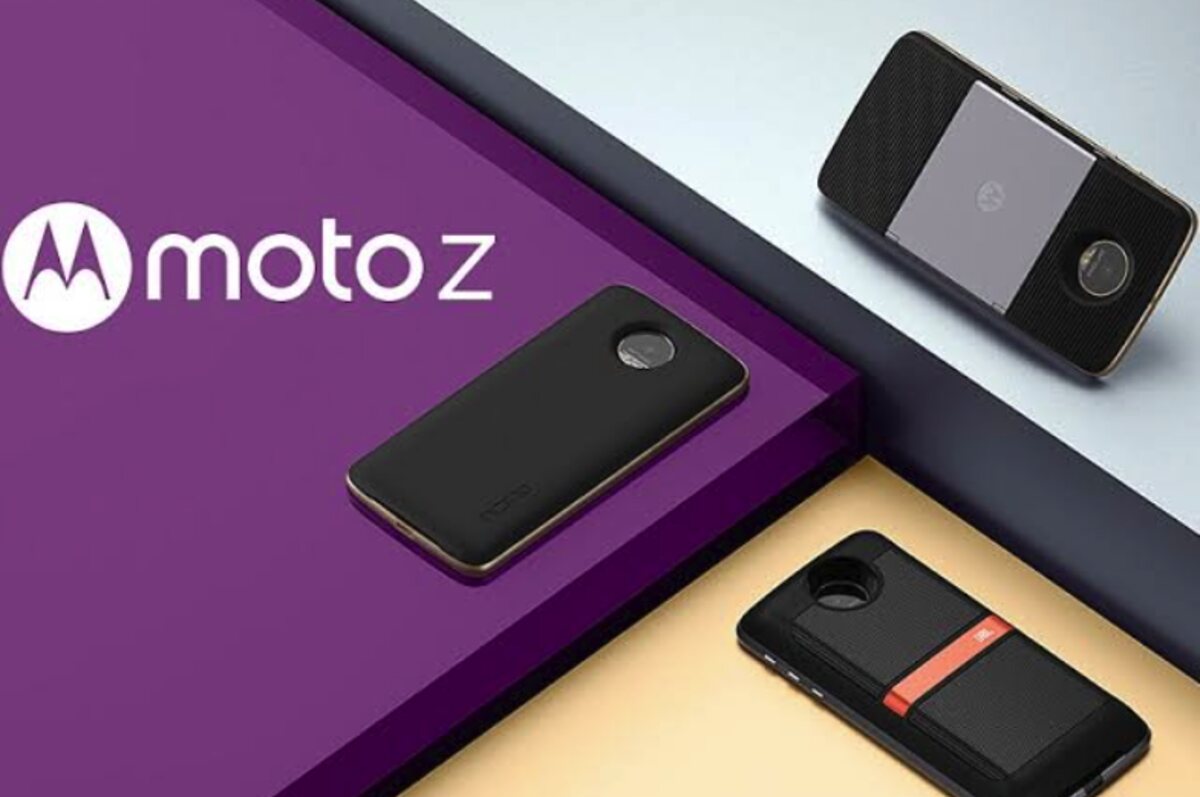
While competitors shipped upgrades, Moto Z shipped a magnetic ecosystem: snap on a projector, a JBL speaker, a Hasselblad camera. #InASnap launched it with a custom Twitter emoji, a Promoted Trend, and a live demo on the New York High Line.
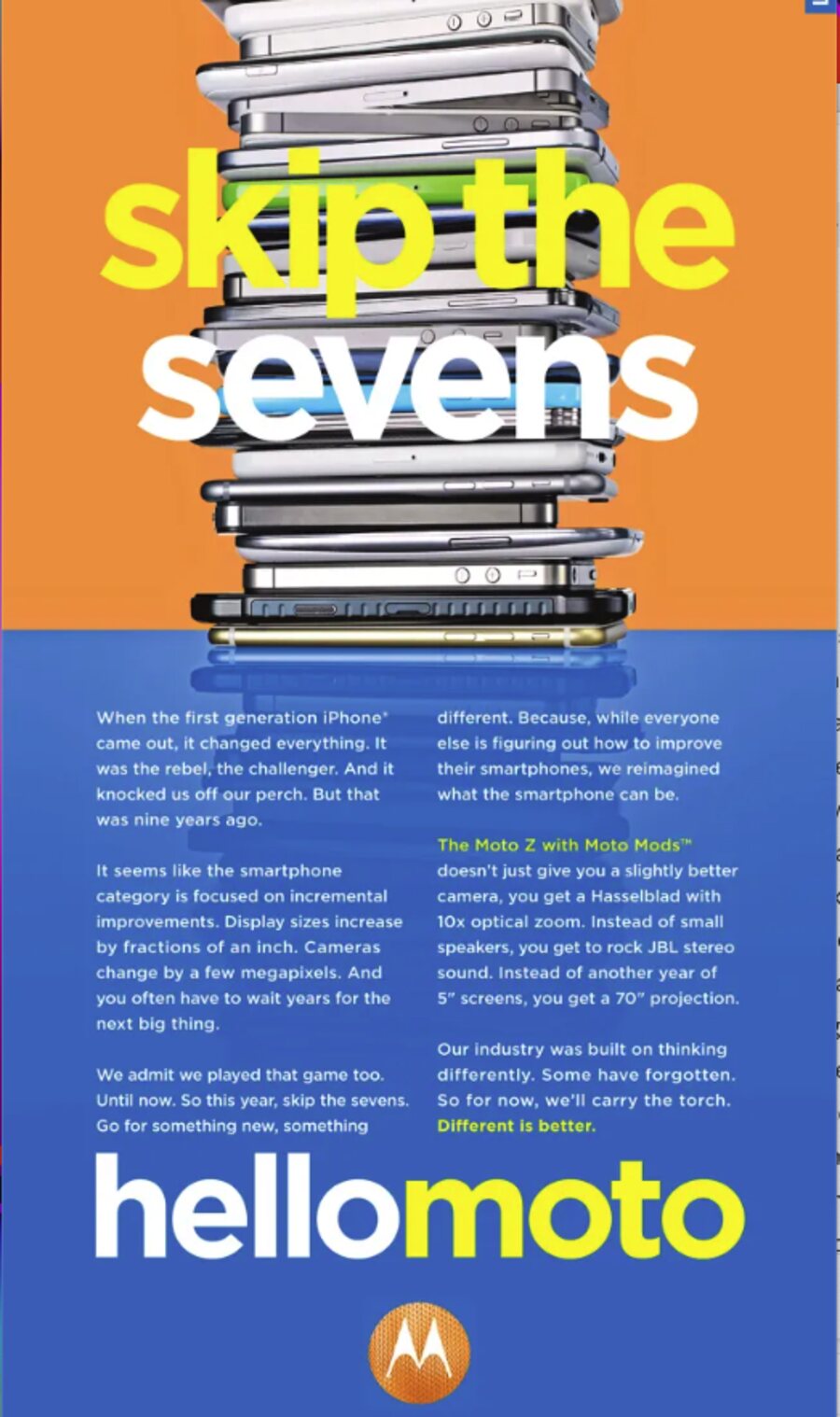
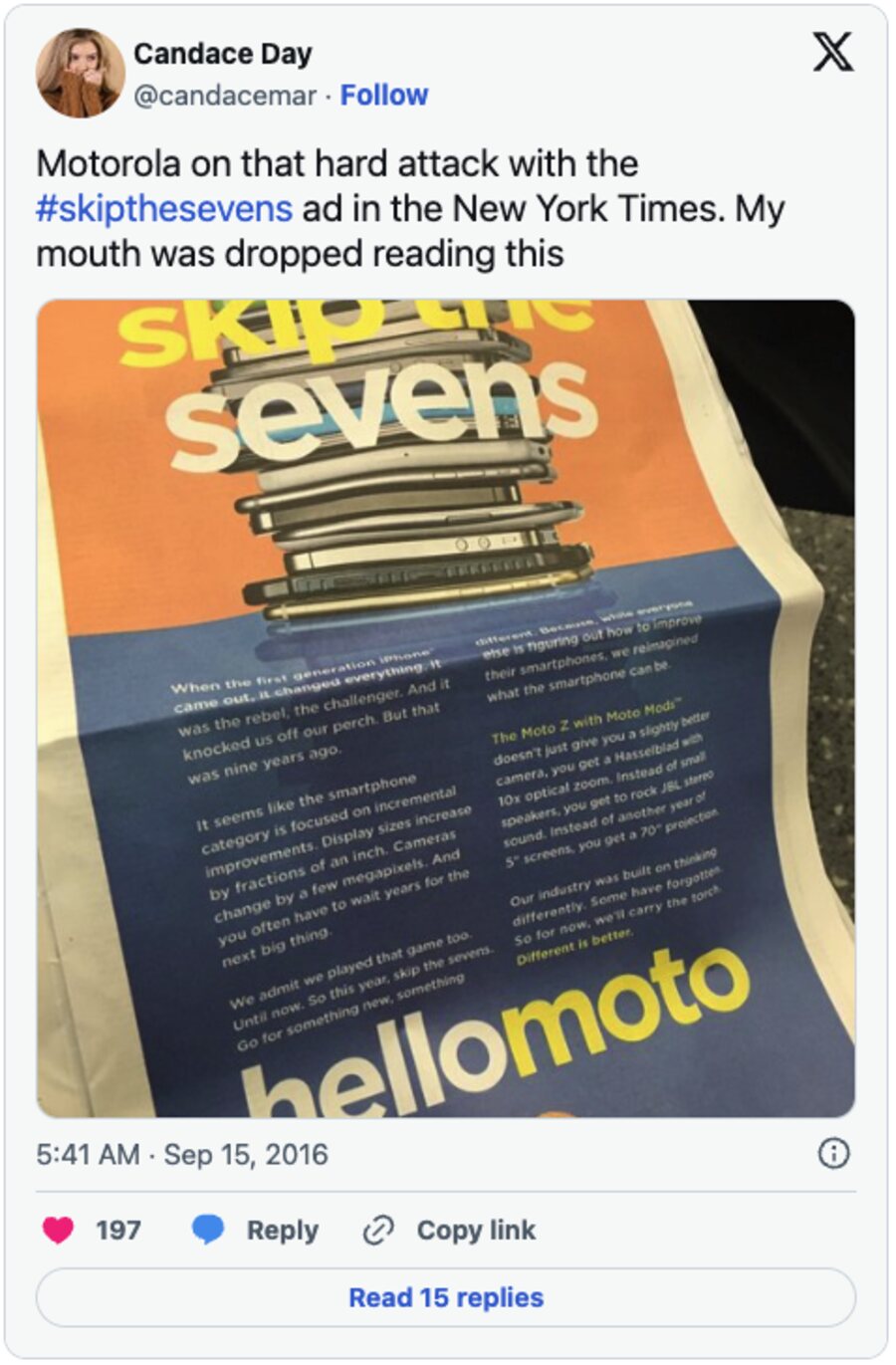
Chapter Two: Skip the Sevens
September 2016. Apple and Samsung both launched their seventh-generation phones. We showed iPhone loyalists a prototype iPhone on hidden camera. It was a Moto Z with Mods. They raved. Then we told them whose phone it was. Adweek called the print campaign some of the most damning anti-Apple copy ever written, and the tech press picked it up within 24 hours. That was the plan. When you cannot buy attention, engineer the story journalists want to write.
Chapter Three: Open the ecosystem
An ecosystem is only as strong as what others build on it. The Transform the Smartphone challenge, run with Indiegogo, drew more than 700 Mod inventions from 55 countries, with two winners backed by up to $1M each from Lenovo. We announced it by strapping a Moto Z to a rocket.
The numbers
Moto Z handsets sold in the first 12 months (Lenovo, 2017) — a challenger taking share from the two biggest brands on earth without matching a dollar of their spend.
Impressions from the #InASnap launch, with a 19× lift in brand mentions and 95% positive sentiment.
Mod inventions from 55 countries, two backed by up to $1M each from Lenovo.
Video views on the challenge announcement, with 38.1M impressions and 122K purchase-consideration clicks.
Challenger math is simple. Every dollar does the work of ten, so the idea has to be the media.
Launch the innovation, not the spec sheet. Engineer the story the press wants to write. Open the platform so your fans build your momentum. That playbook carried me to TCL, where the budgets got bigger and the math never changed.
Phone Life Balance: a phone brand telling people to look up
Culture into commerce.